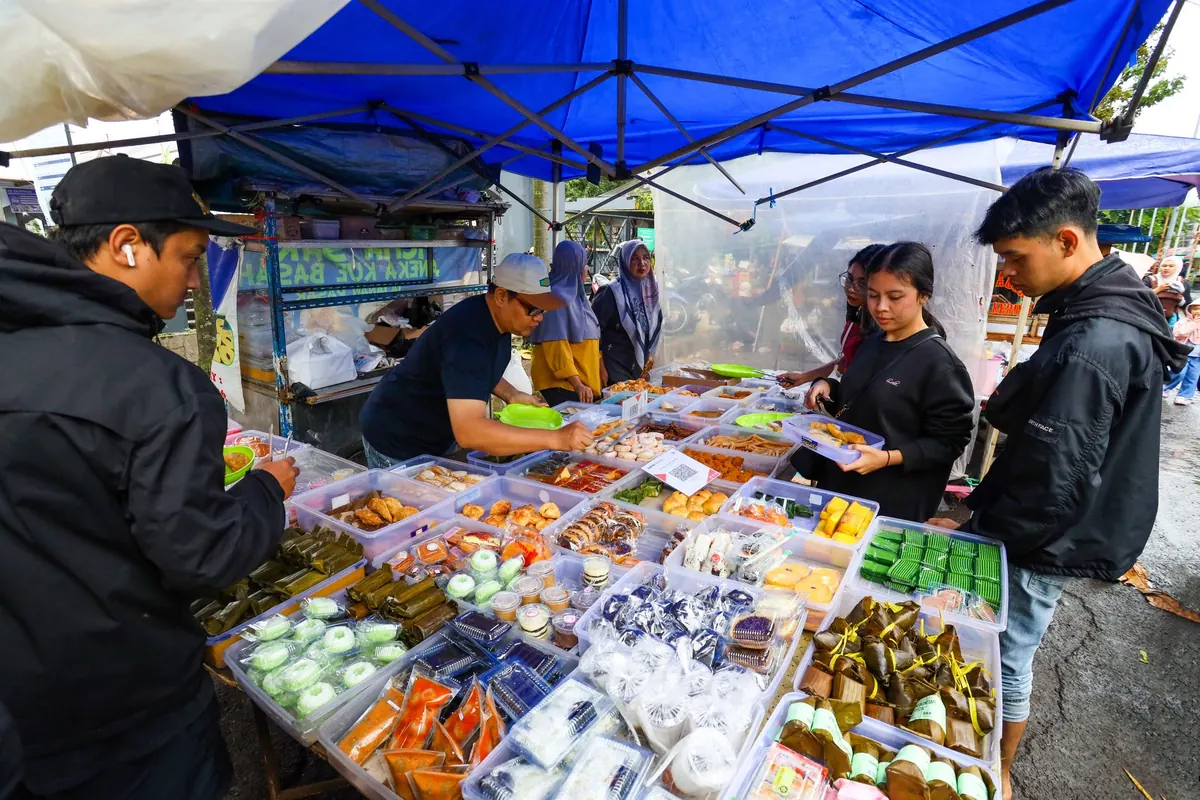
You hear the market before you see it: the clatter of a shutter going up, a vendor calling a price across the aisle, somebody laughing at a joke you will never understand. You lift the camera, and the scene tightens. Shoulders turn. A woman raises a hand to her face. The picture you wanted has already left.
That reaction isn’t a failure of technique. It’s information. A market is not a stage set; it’s somebody’s workplace, and the photographs that feel true come from people who have stopped noticing you. Being unnoticed isn’t something you steal with a long lens. You earn it slowly, with patience and good manners.
Read the Market Before You Raise the Camera
Walk the whole place once with the camera down or switched off. You are learning three things: where the light falls, who works where, and how the crowd moves. Notice which aisle is backlit at the far end, which stalls sit under a white awning that will blow out your highlights, and where the deliveries come in.
Pay attention to direction. Vendors usually face the aisle, but the interesting faces are often turned toward a colleague, a scale, a till, a customer’s outstretched hand. Mark two or three spots you want to come back to. Ten minutes of walking saves an hour of aimless shooting.
Arrive early if you can, and stay past the first hour. The rhythm changes: the rush thins, the joking starts, and the people who were suspicious of you at eight in the morning have seen you twice now.
Stand Still, and Buy Something
Pick a spot that interests you — a corner where two aisles meet, a fish counter with decent side light — and stay there. Movement around a still photographer quickly becomes background noise. People register you once, decide you are part of the furniture, and go back to work. This is the single most useful thing you can do in a crowded market, and it costs nothing.
Then spend a little money. A handful of olives, a peach, a paper cone of nuts. It changes the transaction from intrusion to participation, and it gives you a reason to be standing there that doesn’t require explanation. Ask how much, hand over the note, say thank you in the local language. Three words are usually enough: hello, please, thank you.
If you return to that stall later, you will be the person who bought something, not the person who pointed a lens at a stranger’s face.
Choosing a Lens for Tight Aisles
A small body with a short prime in the 28–50mm equivalent range does most of the work. Wide enough to keep the context — the crates, the hanging bulbs, the press of people — and short enough to push you into the scene rather than let you hide from it. A 35mm equivalent is a good compromise if you only carry one thing.
Long telephotos are awkward here. In a narrow aisle, a 70–200mm is a physical object other people have to dodge, and the compression flattens the layers that make a market look like a market. It also reads as surveillance. If you need reach, use it from the edge of the market looking in, not from the middle of the crowd looking across.
Settings that keep up
Hands move fast. Work at roughly 1/125s or faster when someone is weighing, wrapping or counting change, and accept a higher ISO rather than a blurred gesture. An aperture around f/4 to f/5.6 keeps the vendor sharp while the aisle behind softens just enough to stay readable. Check your highlights against white awnings and sunlit walls — those are what blow first.
A silent shutter helps in quiet indoor markets, but check the screen for banding under fluorescent strip lights before you commit to a burst.
Framing: Depth, Hands and the Wait
Find the frame before you find the subject. A doorway, an arch, the gap between two hanging textiles, the corner of a stall — anything that gives the eye an edge to enter from. Then wait for something to happen inside it.
Build layers. Produce blurring in the foreground, a vendor’s face in the middle distance, the architecture of the hall behind. Shoot verticals to exaggerate the depth of an aisle and horizontals when the story is the width of a counter. Get low so the countertop becomes a horizon. Find a step or a balcony if the market has one.
Look for hands above all: tearing a bag, stacking fruit, wiping a knife, passing coins. Look for repetition — trays of eggs, identical crates, a wall of the same red — and then wait for the one element that breaks it. The gesture is the photograph. Everything else is set dressing.
Asking Permission Without Breaking the Scene
Read the body first. Someone absorbed in work, shoulders relaxed, is usually fine with a nod and a raised camera. But asking costs almost nothing, and it protects both of you. A simple “May I take a photograph?” does the job; where there’s no shared language, gesture at the camera, raise your eyebrows, smile, and wait for a response.
Time it between transactions. Nobody wants to be interrupted mid-sale with a queue behind them. And if you do take the shot, turn the screen around. Showing the frame is a shared language in every market on earth, and it often turns a wary subject into a willing one — sometimes into a collaborator who rearranges the stall and points at what you should be shooting.
When the answer is no
A raised hand, a turned shoulder, a shake of the head, a hand over the face. Those are answers, and they are final. Thank them and move on. If you already pressed the shutter and they object, offer to delete it and delete it in front of them. Do not step back and shoot from behind once someone has said no.
Children and difficult moments
Ask a parent before photographing a child, and if no adult is visible, don’t. Be equally careful with people in hard circumstances — someone sleeping in a doorway, begging, or injured. Those pictures need a reason beyond the composition, and a market is not a reason. Remember too that publishing recognizable faces is a separate decision from taking the photo, and the rules differ between editorial and commercial use and between countries. If a picture is going somewhere public, check what applies where you are.
Small Kit, Quiet Habits
- One small body and one short lens; leave the rest in the bag or at home.
- A spare battery and card in a pocket. Markets eat time and power.
- A wrist strap rather than a shoulder strap — less to catch on a crate or a passer-by.
- A lens cloth, because market air is greasy.
- A card or note with your email, for people who want a copy.
- Keep the camera visible when you are not using it. Fiddling under a jacket looks like hiding.
Step out of the traffic to review your shots. Standing still in the middle of an aisle to check the screen is the fastest way to become an obstacle, and obstacles get remembered.
The Second Visit Is the Better One
Come back the next day or the next week if you can. The second visit is where the good frames usually live: the vendor remembers you, the light is already mapped in your head, and you spend your time watching instead of orienting. Greet the person you bought from. Show them the shot you took.
And put the camera down for ten minutes somewhere in the middle of it. Markets are loud, warm, exhausting, and full of small human business that only becomes visible when you stop hunting for it. The picture will still be there when you pick the camera up again — often a better one, because by then nobody in the aisle is thinking about you at all.
Photo: kevin yung / Pexels